
Ideal Bedtime Calculator
Ideal Wake-up Time Calculator
Nature sounds for easy sleep
Ocean Waves
-
Ocean Waves 1
-
Ocean Waves 2
-
Ocean Waves 3
Bird
-
Bird song 1
-
Bird song 2
-
Bird song 3
Flowing water
-
Big waterfall
-
Flowing water
Insect
-
Frog
-
Cicadas
-
Cricket
Rain
-
Loud thunder
-
Real rain
Table of Contents
The Ultimate Guide to Perfect Sleep: Mastering Your Circadian Rhythm with Our Advanced Sleep Calculator
Do you ever feel like you are fighting a losing battle with your alarm clock? You are not alone. Millions of people struggle with “morning grogginess,” technically known as sleep inertia, even after getting what they think is a full night’s rest. The problem often isn’t how long you slept, but when you woke up.
Welcome to the comprehensive guide for SleepCalculator.my. We have built more than just a simple calculator; we have created a complete Sleep Ecosystem. By combining scientific sleep cycle algorithms, age-specific adjustments, local weather data, and ambient sound therapy, our tool helps you align your life with your body’s natural biological clock.
In this guide, we will explore the science of sleep, walk you through every feature of our tool, and provide actionable tips to revolutionize your rest.
Part 1: The Science Behind the “Grogginess”
To understand why our calculator works, you first need to understand how human sleep functions. Unlike a computer that simply powers down, the human brain goes through active cycles.
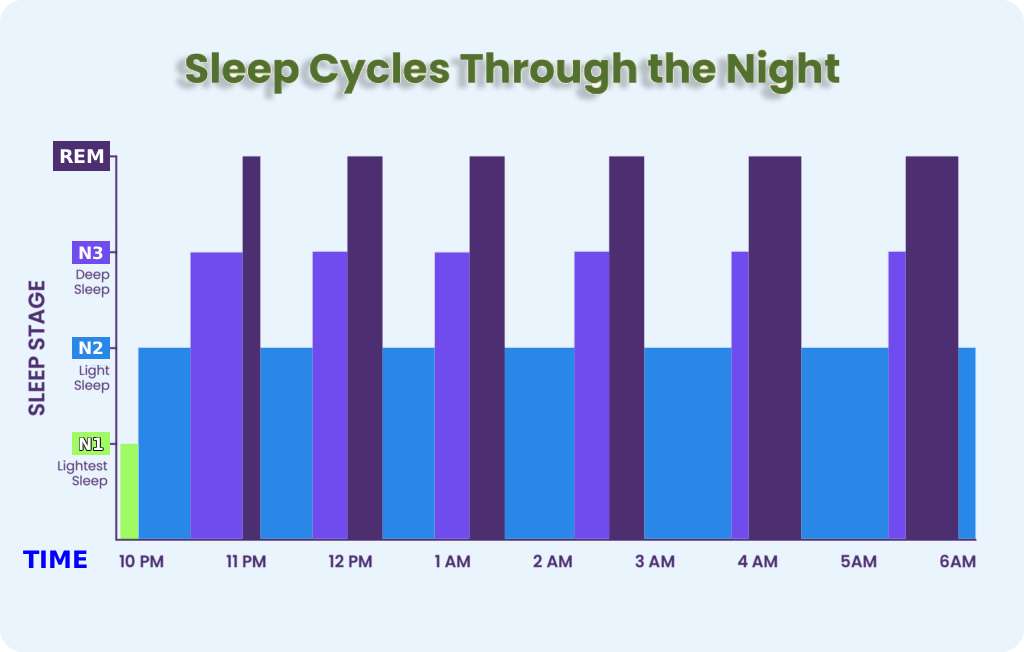
Understanding the 90-Minute Wave
A typical sleep cycle lasts approximately 90 minutes and repeats 4 to 6 times per night. Each cycle consists of distinct stages:
- NREM Stage 1 (Falling Asleep): This is the transition period between wakefulness and sleep. It’s very light; you can be easily awakened.
- NREM Stage 2 (Light Sleep): Your heart rate slows, and body temperature drops. This stage prepares you for deep rest.
- NREM Stage 3 (Deep Sleep): Crucial for physical recovery, tissue repair, and immune system strengthening. It is very hard to wake up from this stage.
- REM (Rapid Eye Movement): The dreaming stage. This is vital for cognitive functions like memory consolidation, learning, and mood regulation.
The Danger Zone: If your alarm goes off while you are in Stage 3 (Deep Sleep), your brain is forced to jump from a delta-wave state to full alertness instantly. This causes that painful, heavy-headed feeling that coffee can’t fix.
The Solution: Our calculator aims to wake you up at the end of a REM cycle or the beginning of Stage 1—the moments when your brain is already closest to a waking state.
Part 2: How to Use the Advanced Sleep Calculator Features
Our tool is unique because it accounts for variables that most basic calculators ignore: Age and Sleep Latency (time to fall asleep).
Feature A: The Ideal Bedtime Calculator
Use this when you have a fixed wake-up time (e.g., for work, school, or a flight).
Step-by-Step Instructions:
1, Locate the Tool: Look for the section titled “Ideal Bedtime Calculator” (marked with a clock icon).
2, Set Your Wake-Up Time: Enter the exact time you need to be out of bed.
3, Adjust “Time to Fall Asleep”: Be honest here. The average person takes 15 minutes (default) to drift off.
Pro Tip: If you usually toss and turn for 30 minutes, change this value to ensure the calculation is accurate.
4, Select Your Age Range: This is our standout feature. Sleep architecture changes drastically as we age.
0-3 Months / 4-11 Months: Infants have shorter sleep cycles (often 50-60 minutes). Our tool adjusts for this.
1-2 Years / 3-5 Years: Toddlers still need more sleep than adults but their cycles are lengthening.
14-65+ Years: The standard adult cycle of ~90 minutes is applied here.
5, Calculate: Click the button to generate your results.
Interpreting the Results: You will see a list of times. We categorize these by the number of cycles.
Best Options: 5 or 6 Cycles (7.5 to 9 hours of sleep).
Good Options: 4 Cycles (6 hours—okay for occasional nights).
Not Recommended: Less than 4 cycles (will lead to sleep deprivation).
Feature B: The Ideal Wake-Up Time Calculator
Use this when you are ready to go to bed immediately.
This function works in reverse. By inputting your current time (or planned bedtime), the tool calculates the precise moments you should set your alarm to ensure you complete full cycles.
Part 3: Optimizing Your Sleep Environment (Weather & Sound)

Calculating the time is only half the battle. If your room is too hot or too noisy, you won’t stay asleep. Our tool integrates environmental controls directly into the interface.
1. The Weather Connection
Thermoregulation is a key key component of the circadian rhythm. Your body temperature needs to drop slightly to initiate sleep.
- The Feature: We provide a 5-Day Weather Forecast with a toggle for Celsius (°C) and Fahrenheit (°F).
- Why It Matters:
- High Temperatures: Can block the release of melatonin and cause wakefulness. If our forecast shows a hot night, use lighter sheets or turn on a fan.
- Humidity: High humidity can make it difficult for sweat to evaporate, leading to discomfort.
- Privacy Note: We request your Location Permission solely to fetch this local weather data. It is not stored or tracked.
2. The Integrated Nature Sound Machine
Silence isn’t always golden. For many, complete silence amplifies sudden background noises (like a slamming door or a car horn). This is where Sound Masking comes in.
We have embedded a high-fidelity Music Box with categorized nature sounds:
- Ocean Waves: The rhythmic crashing mimics the human breath, slowing down your heart rate.
- Flowing Water: Gentle consistency helps dampen jagged background noises.
- Rain & Thunder: “Pink noise” frequencies that are deeply relaxing for the brain.
- Insects & Birds: Biophilic sounds that connect us to nature, reducing cortisol (stress) levels.
How to Use the Smart Timer: You don’t want your phone playing rain sounds all night, draining the battery.
- Play your preferred sound.
- Find the “Timer Off” input box.
- Enter 30 or 60 minutes (enough time for you to enter deep sleep).
- Click OK. The audio will cut off automatically.
3. Custom YouTube Integration
Do you have a specific guided meditation, ASMR video, or Lo-Fi Beats playlist you love? Instead of opening a new tab (which tempts you to scroll through social media), use our Embed YouTube button. Paste the link, and watch/listen directly in our distraction-free interface.
Part 4: Technical Features for Power Users
We have built this tool using modern web technologies to make it feel like a native application.
Timezone Detection Our tool automatically detects your local timezone (displayed near the results). This ensures that if you are traveling, your sleep calculations are always synchronized with your current location, helping you fight jet lag effectively.
Part 5: Top 5 “Sleep Hygiene” Tips to Pair with Our Calculator
Even with the perfect calculation, bad habits can ruin your rest. Follow these rules for the best results:
- The 10-3-2-1 Rule:
- 10 hours before bed: No more caffeine.
- 3 hours before bed: No more food or alcohol.
- 2 hours before bed: No more work.
- 1 hour before bed: No more screens (phones/PCs).
- Respect the Darkness: Light is the strongest synchronizer of your internal clock. Keep your bedroom pitch black. If you must use a nightlight, choose red or amber hues, not blue/white light.
- Consistency is King: Try to wake up at the same time every day, even on weekends. This “anchors” your circadian rhythm, making it easier to fall asleep at night.
- Cool Down: As mentioned in our Weather section, aim for a bedroom temperature between 60-67°F (15-19°C).
- Don’t Force It: If you haven’t fallen asleep after 20 minutes, don’t lie there stressing. Get up, listen to one of our “Flowing Water” tracks, read a physical book (dim light), and return to bed only when sleepy.
Frequently Asked Questions
Is the weather data private?
Yes. Your location data is processed locally to display the forecast and is not stored on our servers.
How many sleep cycles should I aim for?
Most healthy adults feel best after 5 complete cycles (7.5 hours). However, if you are recovering from illness or intense exercise, aiming for 6 cycles (9 hours) might be necessary.
Conclusion: Take Back Control of Your Nights
Sleep is the foundation of health, productivity, and happiness. By using SleepCalculator.my, you aren’t just guessing; you are applying biological science to your schedule.
Whether you are a busy parent trying to sync with your baby’s cycles, a student pulling an all-nighter, or simply someone looking to maximize energy, our tool is designed for you.
Ready to wake up refreshed? Scroll up, check your local weather, pick a soothing sound, and calculate your perfect bedtime now!